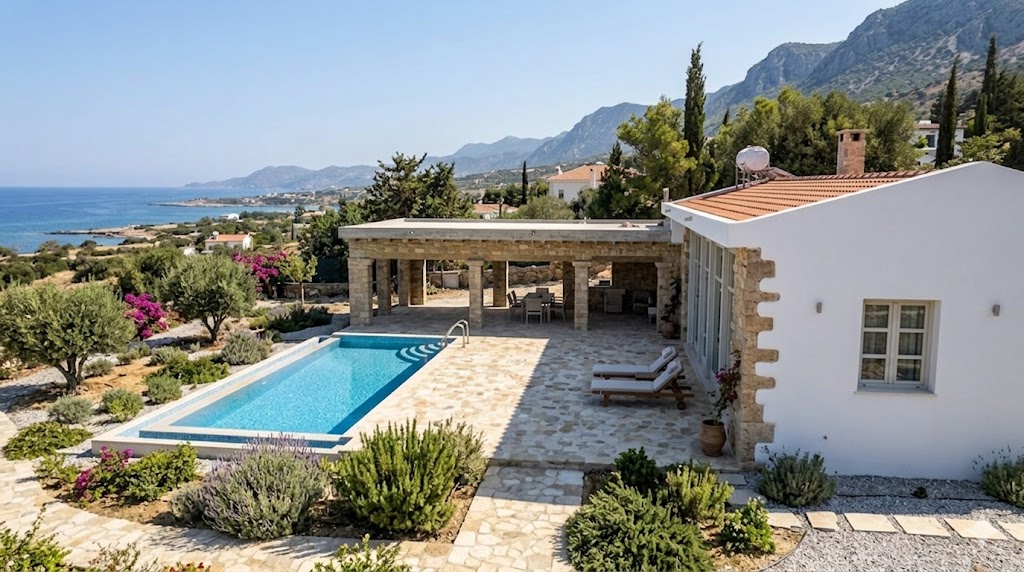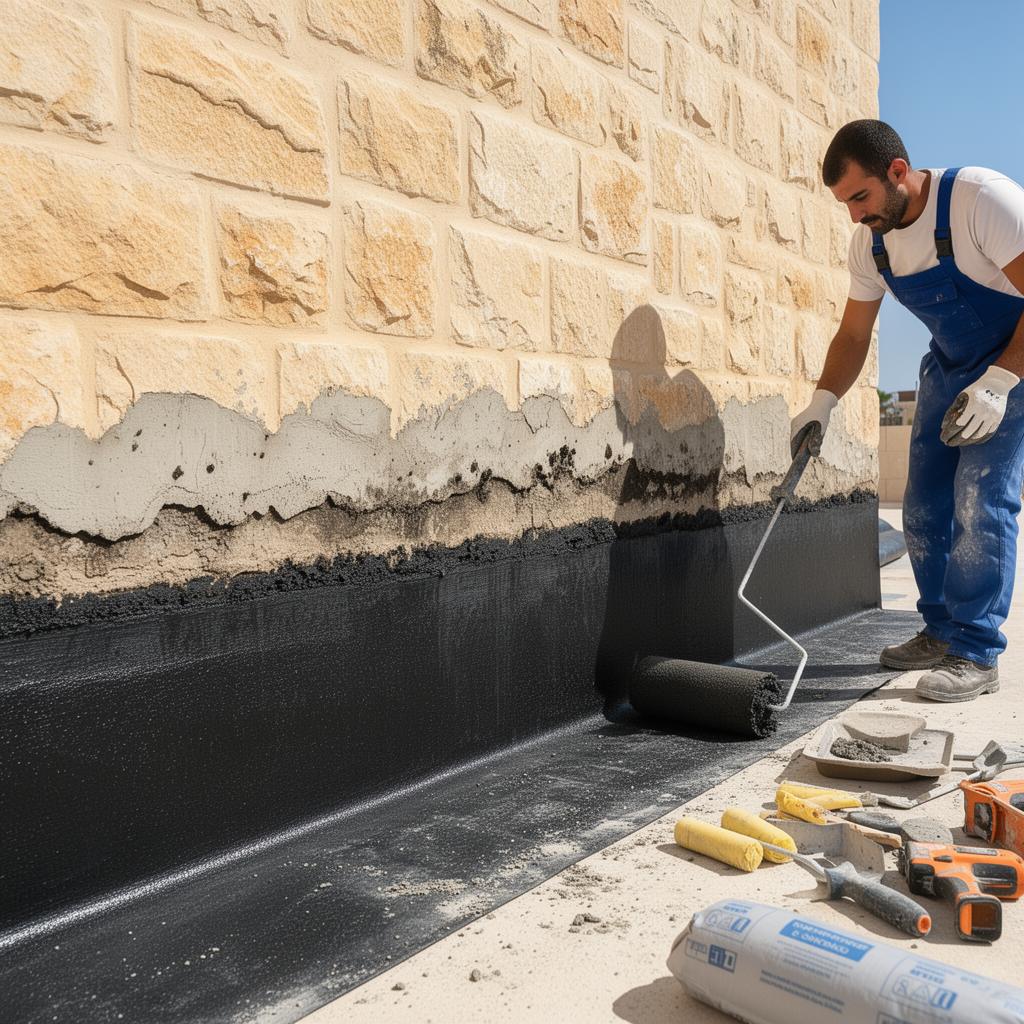

Six months of dust, pine needles, carob pods, bougainvillea leaves and wind-blown sand settle into gutters, roof valleys, terrace outlets and drain gratings. Nobody sees it because nothing has asked those details to work since spring. Then the rain arrives, all at once, and every one of them is asked to work at full capacity on the same night.
A dry autumn is not a safe autumn
It is tempting to read a quiet October as good news. The numbers say otherwise.
The Cyprus Meteorological Department's preliminary bulletin for November 2025 records an island-average of 22.1mm for the month, only 41% of normal. October and November combined came to about 36.1mm, 42% of normal. The same bulletin was headlined "extremely hot and dry".
Then came December. On 8 and 9 December 2025, floods hit the north. Cyprus Mail reported homes and businesses under "feet of water" in Kioneli after local reservoirs overflowed overnight. It also reported landslides around Bellapais and Kazafani, submerged roads, Morphou cut off for several hours, and one death near Alagadi.
Cyprus is a place where the rain comes in a block. The island averages around 500mm a year, with roughly 60% of it falling between December and February. The northern coastal plains average 400–450mm. The switch can be sudden: the long-term tables show Nicosia averaging 17.4mm in October and 54.6mm in November. A dry run-up simply means more debris is sitting in place when the switch flips.
On 3 October this year, Cyprus Mail reported further storms forecast, with inland and northern areas expected to be affected. The season has started.
What actually blocks: small things in the wrong place
Reports from Kyrenia show the pattern. Cyprus FAQ reported that 16 kg/m² (equivalent to 16mm) in 24 hours in Kyrenia, and 15 in Boğaz, flooded an underground concrete channel along Atatürk Street. Broken branches and large stones had washed in and blocked it near the Ordu Pazarı market. The mayor was quoted saying the city has infrastructure deficiencies that struggle to manage floodwater. (The page shows no date, and the site states its articles are produced with AI assistance, so treat the detail with care.)
The lesson is about scale. If a public drain blocks with branches and stones, the same thing happens at property level with leaves, roof grit and garden debris, just in a smaller pipe.
The same outlet also reported hillside warnings in the Kyrenia range. There were landslides and rockfalls on the old road from Doğanköy towards Kyklades, uprooted trees in Kyrenia, and the Nicosia–Kyrenia road closed for several hours after hail. For villa owners above Bellapais, Karmi, Çatalköy and Alsancak, that is the clue that run-off from the slope above your plot matters as much as the rain falling on your roof.
Where water goes wrong on a villa
In our experience, the failures follow a handful of repeating patterns:
- Gutters and valleys full of debris. Water has nowhere to go, spills over the fascia and runs down the wall face or back under the tiles.
- Blocked downpipe outlets and terrace drains. Standing water on a flat terrace or roof finds every hairline crack in the coating.
- Gutter falls that have settled or sagged. Water pools, adds weight, and joints open.
- Loose or slipped roof tiles and cracked flashings around chimneys, parapets and roof lights. Wind lifts them first, rain follows.
- Garden levels that slope towards the house. Paving, planting beds and later landscaping can quietly reverse the original fall.
- Soakaways and gullies silted up, so "drainage" fills in minutes.
- Hillside run-off with no route. Water from the plot above arrives faster than the ground can take it and pushes against walls, basements and garage doors.
None of these is expensive to fix in October. All of them are expensive on the morning after a storm.
A 45-minute pre-winter walk-round
Pick a dry day and look at the house the way rainwater will:
- Roof edge and gutters: clear debris by hand, check the joints, check the fall, and run a hose to see where water stands.
- Downpipes: confirm each outlet is clear at the top, flows freely, and discharges away from the foundations, not against them.
- Roof surface: look from the ground (or a safe vantage point, never a wet roof) for slipped, cracked or missing tiles and damaged flashings.
- Flat roofs and terraces: clear every outlet and overflow, and look for lifted edges, pooled water marks and cracked upstands.
- Gullies, grates and drains: lift covers, clear silt, and check they are still the lowest point in their area.
- Ground levels: stand at the wall and look along the ground. Water should fall away from the house.
- Soakaways and inspection chambers: if they back up in a hose test, they will back up in a storm.
- Trees and overhead branches: remove dead limbs and anything resting on the roof. Trees were uprooted in Kyrenia in the reported storms.
- Slope above the plot: note where run-off enters, and whether a wall, channel or drain is meant to take it.
- Walls and ceilings inside: a circular stain or colour change can indicate a leak. The Fire Department's flood advice, as reported by Cyprus FAQ in November 2025, also recommends repairing such stains promptly.
The same notice recommends keeping drains and grates clean, having sandbags on hand, and checking that basement drainage pumps work. It also warns that ankle-deep moving water can carry a person away and knee-deep water can move a vehicle. If you can see water rising, do not walk or drive into it. The emergency numbers cited were 199 (Fire Department) and 101 (Civil Defence).
If your villa will be empty
Many homes between Kyrenia, Esentepe and Tatlısu stand closed from October. A blocked outlet in an empty house is a leak nobody sees for weeks. If you are overseas, arrange a pre-winter inspection and a check after the first heavy storm. That way someone is looking at the roof, the terrace and the ceilings while there is still time to act.
When to bring in a builder
Clearing leaves is a job for any owner. Resetting gutter falls, replacing slipped tiles, re-forming a terrace outlet, correcting garden levels, re-laying a failed soakaway or creating a proper route for hillside run-off is building work. It should be assessed on site rather than patched from a photograph.
Where 365 Build & Design sits on this
We are a registered North Cyprus company based in Kyrenia, with 40 years of UK construction experience and NHBC-certified standards behind how we assess and repair roofs, gutters, drainage and waterproofing. Our whole team speaks English, so you can talk through what we find, and what is urgent versus what can wait, in plain terms. We cover Kyrenia, Alsancak, Lapta, Çatalköy, Esentepe, Famagusta, Nicosia and İskele. We also run a winter property management service for homes left empty.
Gutters and drains are not glamorous. They are the quiet details that decide whether the first storm is a non-event or a ceiling coming down.
Want your roof, gutters and drainage checked before the rain settles in? Talk to 365 Build & Design about your project.
WhatsApp: https://wa.me/905428833240 Website: https://365builddesign.com/ Based in Kyrenia · Serving North Cyprus · Fully English-speaking team · NHBC certified · 5-star rated on Google