Published: 11 October 2026 · 365 Build & Design, Kyrenia, North Cyprus
Kyrenia's coldest month averages a daytime high of 15°C and an overnight low of 5°C. By British standards that is a mild spring day. And yet every January we take calls from villa owners sitting in a jumper and a blanket, with three aircon units running flat out, watching the electricity meter spin.
The temperature outside is not the problem. The building is.
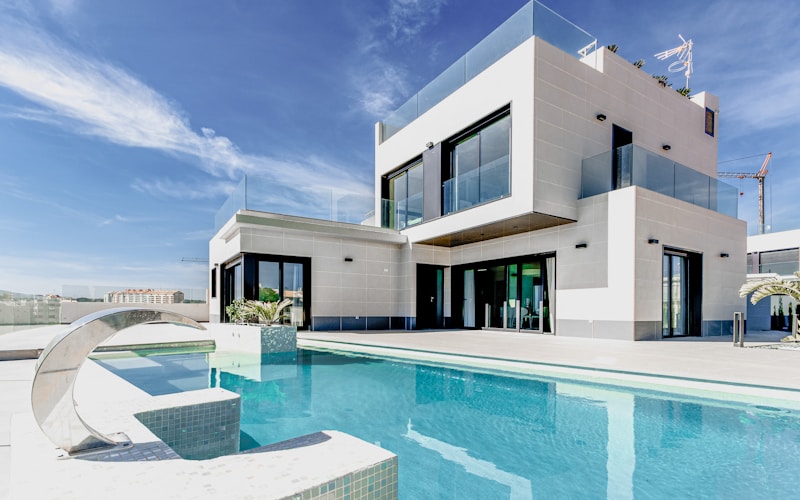
Most villas across Kyrenia, Alsancak, Lapta, Esentepe and Çatalköy were designed around one job: surviving August. Mass, shade, tile, airflow. Nobody was asked to think about a wet week in January with the sea at 17°C and a northerly coming off it. So the house does exactly what it was built to do — it refuses to hold heat.
The building, not the heating
Walk into almost any North Cyprus villa and you are standing in a reinforced concrete frame with block infill. That construction is fast, strong and cheap, and it has one specific weakness in winter.
Concrete conducts heat considerably better than hollow block. So every column and every beam in that frame acts as a thermal bridge — a direct path for heat to leave the building. The inner face of a concrete column runs several degrees colder than the block wall either side of it. You can usually find them with the back of your hand on a cold morning without any instruments at all.
Add the other three things that are near-universal here:
- No insulation in the wall build-up. Render outside, block, plaster inside. That is the whole assembly.
- Aluminium window frames with no thermal break, often with single glazing or early double units whose seals have gone.
- Uninsulated flat roofs and terraces, which are the largest cold surface in the building and sit directly over your living space.
The result is a house where the air can be warmed but the surfaces cannot. And surface temperature is most of what you actually feel. A room at 21°C with cold walls feels markedly colder than a room at 19°C with warm ones — which is why turning the aircon up rarely solves it, and always costs.
What that now costs — and why the tariff matters more than the unit
This is the part that has changed, and it is worth understanding properly before you spend money on heating.
According to Cyprus Mail’s 26 May 2026 report, KIB-TEK raised electricity tariffs by 22% from June 2026, having left them untouched for 14 months while fuel costs rose over 60% and the lira fell 18%. The domestic flat-rate tariff is not a single price — it is a stepped one:
| Monthly usage | Rate per kWh | |---|---| | First 250 kWh | 5.8614 TL (≈ €0.11) | | 251–500 kWh | 12.0920 TL (≈ €0.23) | | 501–750 kWh | 13.0019 TL (≈ €0.24) | | 751–1,000 kWh | 14.0933 TL (≈ €0.26) | | 1,001 kWh and above | 16.8444 TL (≈ €0.32) |
Look at the jump from the first band to the second. It is not a gentle gradient — the second 250 units cost roughly double the first 250, and once you are above 1,000 kWh a month you are paying nearly three times the band-one rate on everything extra.
A villa that comfortably uses 300 kWh in April can easily run 900–1,200 kWh in a cold, wet January with electric heating. Heating pushes a larger share of your total consumption into the expensive bands, increasing the bill and average cost per unit. The units already used in lower bands are not retrospectively charged at the higher rate.
There is also a three-time tariff available, and the spread on it is substantial: 7.9711 TL per kWh off-peak (22:00–07:00) against 16.7282 TL at peak (17:00–22:00) — more than double. If you use that tariff and your heating strategy is "blast the aircon when we get in at six", you are heating at the worst possible rate of the day.
Tariff note: These are the domestic rates reported for June 2026, not a current quotation. Euro equivalents use the exchange rate at that date. Confirm current rates and your tariff with KIB-TEK.
Heating options, honestly
Inverter air conditioning in heat mode is, under suitable conditions, among the most efficient electric heating options available to you. A modern air-source unit achieves a coefficient of performance of roughly 3.0 to 4.5 at mild outdoor temperatures — meaning three to four and a half units of heat for every unit of electricity. In North Cyprus, where outdoor temperatures rarely drop near the point at which heat pump efficiency collapses, that is a genuinely good match for the climate. The caveats: old non-inverter units perform nowhere near this, and no COP figure helps if the heat is leaking straight out through an uninsulated roof.
Underfloor heating gives the best comfort by a distance, because it warms surfaces rather than air and removes the cold-floor sensation entirely. It is most worthwhile as part of a renovation where the floor is coming up anyway — and it must be laid over proper insulation, otherwise a meaningful share of the heat goes into the slab and the ground beneath it.
Bottled gas and paraffin heaters are the ones to be careful with. They can be cheap to buy, but unflued units release a very large volume of water vapour into the room as they burn. In a building already prone to condensation, that worsens the problem below. Safe ventilation and the manufacturer’s instructions also matter.
The condensation trap — and why heating bursts can worsen it
Here is the mechanism that catches people out.
A family of four releases around 10 litres of water a day into their home through breathing, cooking, showering and drying laundry. Coastal winter humidity in North Cyprus runs at 75–80%, but cold outside air can still help drying when warmed indoors; relative humidity alone does not determine its drying potential.
Target indoor relative humidity in winter is 40–55%. At 65–75%, condensation risk can rise; above 75%, mould risk can rise too. These are guidance ranges, not fixed thresholds: surface temperature, duration and ventilation matter. And condensation does not form evenly — it forms on the coldest surface it can reach. Which, in a concrete-framed villa, means the inner face of the columns, the window reveals, the north-facing corner and the wall behind the wardrobe.
This is why black spotting appears in houses where no water has ever got in. It also explains the single most common mistake: heating hard for three hours in the evening and letting everything go cold overnight. The air warms, picks up moisture, and then dumps it onto surfaces that never got warm at all. Steady, moderate heat can improve comfort and condensation control, but it is not guaranteed to use less energy or cost less than intermittent heating in every home.
Sensible targets: 18–21°C overall, 19–22°C in living rooms, 16–20°C in bedrooms, and don't let unoccupied rooms fall below 15°C.
The right order of work
Spending on heating before fixing the building is how people end up with large bills and a cold house. The sequence that works:
- Stop water getting in first. Cracked render, failed roof or terrace membrane, falls shallower than 1.5–2% toward outlets. A wet wall conducts heat far better than a dry one, so penetrating damp is also an insulation problem.
- External wall insulation. This can be a high-value intervention in this construction type, because it raises internal surface temperatures, covers the column and beam cold bridges rather than working around them, and cuts summer heat gain as well. Roof insulation and junction details should be assessed alongside it.
- Glazing and frames. Thermal-break frames with sealed double units. Also check the drainage slots in sliding tracks while you are there.
- Ventilation you control. Extract fans in bathrooms and kitchen, internal doors open, a 15-minute purge with windows open each morning, laundry dried outside. Ventilation is not the enemy of warmth — uncontrolled leakage is.
- Then size and install the heating — for the improved building, not the old one. A properly insulated villa needs less heating capacity, which is money back.
- Pull furniture 5–10cm off external walls so air can move behind it. Free, and it works.
A diagnostic you can do this week
- Tape a 30 × 30cm square of kitchen foil tightly to a suspect wall and leave it 48 hours. Damp on the room side may indicate condensation. Damp behind the foil may indicate moisture coming through the wall. This is an initial check, not a conclusive diagnosis.
- Put a cheap hygrometer in each main room and note the readings morning and evening for a week.
- On a cold morning, run your hand across the wall and then across the column line. If you can feel the column, you have found your thermal bridge.
- Check window reveals and the north-facing internal corners for the first spotting.
- Walk the external render and the roof outlets now, before the December rain.
Bring that information to a site visit and you will get a far more useful answer than any of us can give over WhatsApp.
Where we fit
365 Build & Design brings 40 years of UK construction experience to North Cyprus. We are NHBC certified, an officially registered TRNC company based in Kyrenia, with a fully English-speaking team and a 5-star Google rating. We work across Kyrenia, Alsancak, Lapta, Esentepe, Çatalköy, Famagusta, Nicosia and İskele.
We install air conditioning, underfloor heating, central heating and boilers, and solar — but we would rather look at the building first and tell you honestly which of those you actually need. Sometimes the right answer is insulation and new glazing, and a smaller heating system than you were expecting to buy.
Project management and the final painting work can be planned around that sequence.
Climate figures are long-term averages, not a forecast for this winter. COP ranges are general performance guidance, not a promise for a particular unit. Humidity and moisture figures are published guidance, not measurements of your home. Insulation build-up, glazing specification and heating capacity must be checked on site and approved by James or Huss before being quoted.
Cold house this winter? Let's find out why before you spend on heating.
Sources
- Weather2Travel — Kyrenia monthly climate averages (January 15°C/5°C, December 16°C/7°C and 92mm, November 21°C/10°C and 48mm, October 27°C/15°C and 33mm, sea temperature by month): https://www.weather2travel.com/cyprus/kyrenia/november/
- Cyprus Mail, 26 May 2026 — "North's electricity prices rise by 22%" (KIB-TEK 22% increase from June 2026; full stepped domestic tariff table in TL and €; three-time tariff normal/peak/off-peak rates; 14 months without adjustment, fuel up over 60%, cost of living up 38%, lira down 18%): https://cyprus-mail.com/2026/05/26/norths-electricity-prices-rise-by-22
- Düzkar Dizayn — "Damp and Mould in North Cyprus Homes: Causes and Real Fixes" (concrete frame with block infill and colder column/beam inner faces; coastal winter humidity 75–80%; indoor RH bands 40–55% target, 65–75% condensation likely, above 75% mould likely; roof falls minimum 1.5–2%; furniture clearance 5–10cm; 30 × 30cm foil test over 48 hours; external wall insulation as the primary condensation fix): https://duzkardizayn.com/en/blog/damp-and-mould-in-north-cyprus-homes
- Cyprus Renovation Group — "3 tips to prevent condensation, damp and mould in Cyprus" (family of four releases ~10 litres of water vapour per day; stable winter targets 18–21°C overall, 19–22°C living rooms, 16–20°C bedrooms, unoccupied rooms not below 15°C; 15-minute morning purge ventilation; avoid paraffin and bottled-gas heaters): https://cyprusrenovate.com/3-tips-prevent-damp-mould-condensation-in-cyprus/
- PickHVAC — "Heat Pump Efficiency vs Temperature" (air-source heat pump COP of approximately 3.0–4.5 at mild winter outdoor temperatures, 3.5–4.5 at 10°C): https://www.pickhvac.com/heat-pump-efficiency-temperature-performance-cold-warm/
WhatsApp: https://wa.me/905428833240 Website: https://365builddesign.com/